
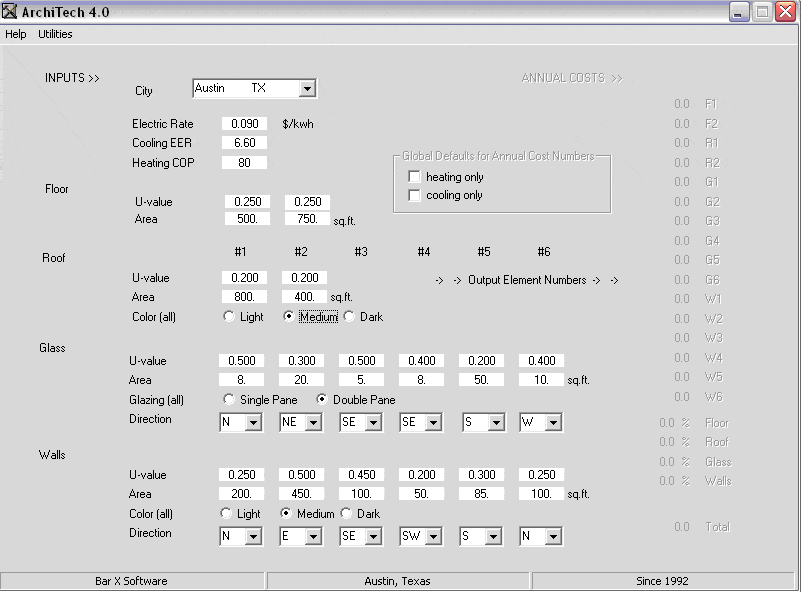
The program does the same annual building loads as version 2.0 but lets you get into all the gritty details. You spend a few minutes inputting data on a building, and the program calculates the annual energy use.
It does the same calculations but allows more refined inputs. There is a separate screen for each building element that gives the annual energy costs associated with that element alone: glass, roof, walls, infiltration, floor, and misc. loads. The program has a world wide weather database.
Real World Validation
It was used to do energy audits of a dozen small hospitals for the Texas Lone Star Program, the largest energy conservation program in the world ~ so you can be confident the results are rock solid.
An interesting use of the program is to input all the data on your building, verify the results are more or less accurate for your annual utility bills, and then experiment with changes to the global values at the top.
A building in a cold climate achieves savings from different projects than a building in a warm climate. High-efficiency windows facing different directions save more energy than retrofits to other directions.
A higher-efficiency cooling system saves much more money in a warm climate, and likewise for heating efficiency in a cold climate. These are obvious conclusions, of course, but it’s instructive to know HOW MUCH you save.
If you get a new HVAC system, this program helps you to ask the right questions. Virtually any new technology “saves energy.” The key question is HOW MUCH energy it saves.
This is the same as the Energy Auditor 2.0 spreadsheet.
